
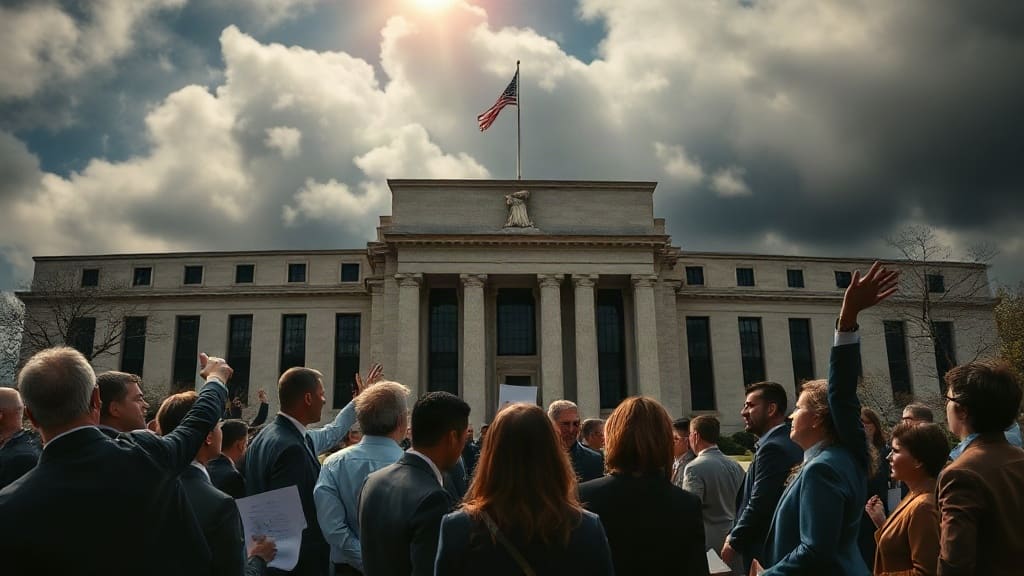
When Kevin Warsh took the helm of the Federal Reserve, few expected the pace of change that has followed. Within months, the central bank has seen a flurry of new initiatives, from rethinking its communication strategy to overhauling its approach to financial regulation. But the most consequential shift may be in monetary policy: Warsh's emerging framework suggests that further interest rate hikes remain on the table, a stance that is already drawing fire from both inside and outside the Fed.
The resistance is not just about rates. It is about the speed and scope of Warsh's agenda, which critics say risks unsettling markets and undermining the Fed's credibility. Supporters counter that bold action is exactly what is needed after years of ultra-loose policy. As the debate intensifies, understanding what Warsh is trying to achieve, and why it matters, becomes essential for anyone watching the economy.
The Warsh Doctrine: A Return to Rules-Based Policy
At the core of Warsh's approach is a belief that the Fed should rely more on systematic rules and less on discretionary judgment. He has long argued that the central bank's post-2008 toolkit, including quantitative easing and forward guidance, distorted markets and sowed the seeds of future instability. Now, as chair, he is putting that philosophy into practice.
One of the first moves was to establish a new framework for setting interest rates, one that places greater weight on money supply aggregates and credit growth. While details remain scarce, the framework implies that rates could rise even if inflation appears contained, because the Fed would be targeting imbalances before they erupt. This is a significant departure from the inflation-targeting regime that has dominated since the 1990s.
Warsh has also moved to streamline the Fed's balance sheet, allowing assets to run off more quickly than under his predecessor. The goal is to reduce the central bank's footprint in financial markets and restore a more normal yield curve. But the pace of runoff has raised eyebrows among some Fed watchers, who worry that it could tighten financial conditions more than intended.
Key Changes So Far
- New policy framework that emphasizes rules and preemptive action against imbalances.
- Faster balance sheet reduction to shrink the Fed's asset holdings.
- Overhaul of communication, including fewer speeches and a shorter policy statement.
- Reorganization of the supervisory arm, with a focus on tailoring rules for smaller banks.
These changes have not gone unnoticed. Financial markets have swung on every hint of Warsh's intentions, and the yield on the 10-year Treasury has been particularly volatile. Investors are trying to gauge how far the Fed will go, and whether the economy can handle higher rates.
Why Further Rate Hikes Are Possible
Warsh has not explicitly promised more hikes, but his framework makes them more likely. By targeting credit growth and asset prices, the Fed could tighten even if inflation is near its 2% goal. This is a subtle but important shift: it means the Fed is no longer just an inflation fighter, but also a guardian against financial excess.
Some economists argue that this is a recipe for overkill. They point out that the economy is already slowing, and that additional rate increases could tip it into recession. Others say that the Fed needs to act now to prevent a larger bubble later. The debate hinges on how much weight to give to financial stability versus near-term growth.
Warsh's own view seems clear: he believes that the costs of waiting are higher than the costs of acting. In speeches, he has warned that prolonged low rates encourage risky borrowing and misallocate capital. By moving preemptively, he hopes to avoid a repeat of the 2008 crisis, when the Fed was forced to cut rates aggressively after a long period of easy money.
But timing is everything. If the Fed hikes too soon, it could stifle a fragile recovery. If it waits too long, it might have to play catch-up later. Warsh's challenge is to calibrate policy in real time, without the benefit of perfect foresight.
Resistance from Within and Without
Not everyone at the Fed shares Warsh's enthusiasm for rapid change. Several regional Fed presidents have publicly expressed caution, arguing that the economy still needs support. The divide was on display at the last FOMC meeting, where the vote to hold rates steady was not unanimous. Although the dissent came from the dovish side, it signaled that Warsh's push for a tighter stance is not universally welcomed.
Outside the Fed, the pushback is even louder. Progressive lawmakers have accused Warsh of prioritizing Wall Street over Main Street, warning that higher rates will hurt workers and small businesses. Some consumer advocates point out that credit card rates and auto loans are already climbing, squeezing household budgets. They argue that the Fed should focus on maximizing employment, not on preemptive strikes against phantom bubbles.
Internationally, the reaction has been mixed. Emerging market economies are bracing for capital outflows as U.S. rates rise, which could strain their currencies and debt burdens. The IMF has urged the Fed to communicate clearly and to consider the global spillovers of its policies. Warsh has acknowledged these concerns but insists that the Fed's mandate is domestic.
The Political Dimension
Warsh's tenure is also unfolding against a charged political backdrop. Some legislators have questioned whether the Fed is overstepping its authority by venturing into areas like climate risk and income inequality. Warsh has tried to steer clear of those debates, focusing instead on traditional monetary policy. But his actions inevitably have political consequences, especially as the 2024 election approaches.
President Biden has nominated several new governors to the Fed board, some of whom are more dovish than Warsh. This could create a more contentious dynamic in the coming months, as the board weighs the chair's proposals. The Senate Banking Committee has already signaled that it will scrutinize Warsh's regulatory changes, particularly those that ease rules for community banks.
What It Means for Markets and the Economy
For investors, the Warsh era means higher volatility and a greater need to parse every word from the Fed. The days of predictable, gradual rate increases may be over. Instead, markets must adapt to a central bank that is willing to act boldly and unexpectedly.
Bond yields have risen in response, with the 2-year Treasury note climbing to its highest level in years. Equities have been choppy, as growth stocks sell off on rate fears while value stocks outperform. The dollar has strengthened, making U.S. exports more expensive and putting pressure on multinational earnings.
For the broader economy, the impact is less clear. Higher rates could cool housing and business investment, but they could also curb inflation and prevent asset bubbles. The labor market remains tight, with unemployment near historic lows. If Warsh can achieve a soft landing, his legacy will be secure. If not, the backlash could be severe.
Small businesses are particularly vulnerable. Many rely on credit lines tied to the prime rate, which moves with the fed funds rate. As rates rise, their borrowing costs increase, squeezing margins. Some may delay expansion plans or lay off workers. Warsh has argued that this is a necessary adjustment after years of artificially cheap money, but the pain will be real for many.
Looking Ahead: The Path Forward
Warsh's regime change is still in its early stages. The next few months will be crucial as the Fed finalizes its new framework and decides on the pace of rate hikes. Key data points to watch include the personal consumption expenditures (PCE) price index, the employment cost index, and credit growth figures. Any sign of overheating could prompt the Fed to act more aggressively.
At the same time, Warsh must manage the internal dynamics of the FOMC. He needs to build consensus, or at least enough support to advance his agenda. His persuasive skills will be tested as he tries to bring dovish colleagues on board. If he fails, the Fed could become paralyzed by dissent, undermining its effectiveness.
Ultimately, the success of Warsh's overhaul will be judged by outcomes: inflation, employment, and financial stability. If his policies deliver sustainable growth without crises, the resistance may fade. If not, the Fed could face a credibility crisis and a reversal of his reforms. Either way, the Warsh era is a pivotal moment for the central bank and for the global economy.
Frequently Asked Questions
What is Kevin Warsh's policy framework?
Warsh advocates a rules-based approach that emphasizes money supply and credit growth, aiming to preempt financial imbalances. This could lead to higher interest rates even if inflation is near target.
Why are further rate hikes possible under Warsh?
Because his framework targets financial excess, not just inflation. If credit growth or asset prices surge, the Fed may tighten to prevent bubbles, even if traditional inflation measures are tame.
Who opposes Warsh's changes at the Fed?
Some regional Fed presidents and dovish governors prefer to maintain low rates to support employment. Outside the Fed, progressive lawmakers and consumer advocates worry about the impact on workers and small businesses.
How do financial markets react to Warsh's policies?
Markets have become more volatile, with bond yields rising and equities fluctuating. Investors are closely parsing Fed communications for signals about the pace of tightening.
What does this mean for the average consumer?
Borrowing costs for credit cards, auto loans, and mortgages may increase. Savers could benefit from higher deposit rates, but borrowers will feel the squeeze.