
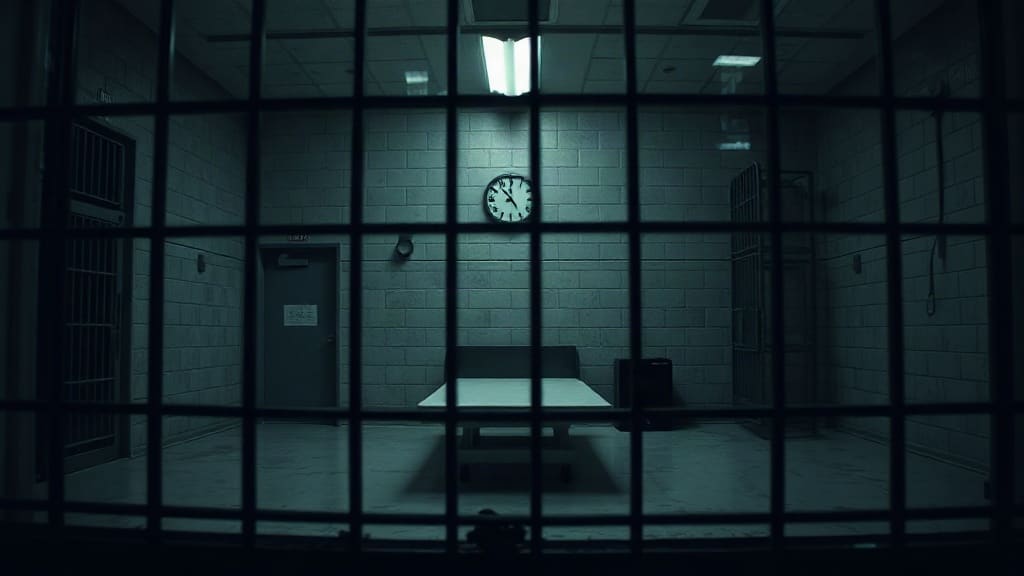
The state of Tennessee has temporarily halted all executions following a deeply troubling incident Wednesday night at the Riverbend Maximum Security Institution in Nashville. Christa Pike, a death row inmate convicted of a 1994 murder, was scheduled to be put to death by lethal injection. Instead, more than 40 minutes after receiving what officials described as a double dose of the lethal drug, Pike remained alive and was reportedly snoring in the execution chamber. Her attorney now says she is in critical condition, and Governor Bill Lee has suspended executions until at least the end of the year while an independent inquiry examines what went wrong.
The episode has reignited long-simmering debates about capital punishment in the United States, raising urgent questions about the reliability of lethal injection protocols, the competence of execution teams, and the ethical implications of a state failing to carry out a sentence it had fought to impose. For death penalty opponents and supporters alike, the botched execution of Christa Pike is a stark reminder that the machinery of state killing is far from infallible.
What Happened in the Execution Chamber
According to initial accounts, Christa Pike was wheeled into the execution chamber at Riverbend on Wednesday evening. The procedure began as planned, with the administration of a lethal cocktail intended to render her unconscious and then stop her heart. But something went wrong. Instead of dying within the expected timeframe, Pike continued to breathe. Witnesses reported that she was snoring, a sign that she was not fully unconscious or that the drugs had not achieved their intended effect. Medical personnel then administered a second dose of the lethal drug, but even that did not immediately kill her.
Forty minutes after the first injection, Pike was still alive. Prison officials eventually halted the procedure, and she was returned to a medical unit. Her lawyer, in a statement released Thursday, said Pike is now in critical condition, suffering from the effects of the failed execution. The exact nature of her injuries has not been disclosed, but the fact that she survived a lethal injection attempt is almost unprecedented in modern American execution history.
Governor Lee's Response and Suspension of Executions
Governor Bill Lee, a Republican, addressed the incident on Thursday, calling it "deeply disturbing." In a move that surprised many observers, he announced an immediate moratorium on all executions in Tennessee until at least the end of the year. He also ordered an independent inquiry into the failed procedure, promising a thorough review of what he called a "serious malfunction" of the state's execution protocol.
"I take this matter very seriously," Lee said in a brief press conference. "We must ensure that justice is carried out properly and humanely. Until we understand exactly what happened, it would be irresponsible to proceed with any further executions." The governor's decision effectively pauses the death warrants of several other inmates who were scheduled to be executed in the coming months. It also places Tennessee at the center of a national conversation about the death penalty, a practice that has been steadily declining in use across the country but remains legal in 27 states.
The Case of Christa Pike
Christa Pike was convicted in 1996 for the 1994 murder of a fellow Job Corps student, Colleen Slemmer. The crime was brutal: Pike and two accomplices tortured and killed Slemmer in a wooded area near Knoxville, reportedly driven by jealousy over a boyfriend. Pike was 18 at the time of the murder, making her one of the youngest women ever sentenced to death in the United States. Her case has been a fixture of death penalty debates for decades, with supporters of her execution arguing that the heinous nature of the crime demands the ultimate punishment, and opponents pointing to her troubled upbringing and the possibility of rehabilitation.
Over the years, Pike's legal team has filed numerous appeals, citing issues ranging from ineffective counsel to mental health concerns. But her conviction and sentence have been upheld repeatedly by state and federal courts. At the time of the failed execution, she had exhausted most of her appeals and was scheduled to die. Now, with her life hanging in the balance, her case has taken yet another dramatic turn.
Legal and Ethical Implications
The failed execution of Christa Pike raises a host of legal and ethical questions. First, there is the issue of cruel and unusual punishment. The Eighth Amendment to the U.S. Constitution prohibits punishments that are "cruel and unusual." If an execution is botched, causing prolonged suffering, it can be argued that the state has violated the condemned person's constitutional rights. In Pike's case, the fact that she remained alive and possibly conscious for an extended period could form the basis of a new legal challenge, not only for her but for other death row inmates in Tennessee.
Second, the incident casts doubt on the competence of the state's execution team. Lethal injection is a medical procedure, but it is carried out by prison staff who are not typically trained medical professionals. Mistakes can happen: veins can be missed, drugs can be improperly mixed, and dosages can be miscalculated. In Tennessee, the protocol involves a three-drug cocktail, but the state has refused to disclose the exact source of the drugs, citing confidentiality agreements with suppliers. This secrecy makes it difficult to assess whether the drugs themselves were faulty or whether the administration was flawed.
Third, the moratorium and independent inquiry could have far-reaching consequences. If the inquiry finds systemic problems, it may lead to a longer pause or even a permanent halt to executions in Tennessee. Already, some state legislators have called for a complete review of the death penalty, and advocacy groups are using the incident to push for abolition. On the other hand, supporters of capital punishment argue that a single botched execution should not derail a just sentence, especially for a crime as horrific as Pike's.
National Context: A Declining but Troubled Practice
The United States has seen a steady decline in executions over the past two decades. In 2023, only 24 people were executed, down from a peak of 98 in 1999. Public support for the death penalty has also fallen, with polls showing that a majority of Americans now prefer life imprisonment without parole over execution. Yet the practice persists, and botched executions are not as rare as one might think. Since the 1970s, there have been numerous reports of executions gone wrong, from needles becoming clogged to inmates taking hours to die.
Tennessee itself has a troubled history with lethal injection. In 2018, the state executed Billy Ray Irick using a three-drug protocol that critics said caused unnecessary suffering. More recently, the state had planned to use a single drug, midazolam, which has been linked to several problematic executions in other states. The Pike case may accelerate the trend away from lethal injection and toward alternative methods such as nitrogen hypoxia, which some states have adopted as a backup. But those methods are also controversial and untested.
What's Next for Pike and Tennessee
For now, Christa Pike remains in critical condition at a hospital or prison medical facility. Her attorney has vowed to fight any attempt to reschedule her execution, arguing that the state has already subjected her to cruel and unusual punishment. The independent inquiry, expected to take several months, will examine every aspect of the procedure, from drug procurement to staff training. Governor Lee has not indicated whether he will commute Pike's sentence or grant a reprieve beyond the end of the year.
Meanwhile, the families of victims and the families of death row inmates are left in limbo. Colleen Slemmer's family has waited nearly three decades for closure, and the failed execution only prolongs their agony. Pike's family, on the other hand, is now grappling with the possibility that she may survive but with severe injuries. The human cost of this botched execution extends far beyond the chamber walls.
Frequently Asked Questions
Why did Tennessee suspend executions after the Christa Pike case?
Governor Bill Lee suspended executions to allow an independent inquiry into the failed lethal injection. The state wants to determine what went wrong and ensure that future executions, if they proceed, are carried out properly and humanely.
What is Christa Pike's current condition?
Her lawyer says she is in critical condition after receiving a double dose of the lethal drug but surviving. The exact nature of her injuries has not been made public, but she remains under medical care.
Could the failed execution lead to the abolition of the death penalty in Tennessee?
It is too early to say. The moratorium and inquiry may lead to reforms or a longer pause, but abolishing the death penalty would require legislative action or a court ruling. Advocacy groups are using the incident to push for abolition, while supporters of capital punishment argue that the sentence should still be carried out.
What happens to other death row inmates in Tennessee during the suspension?
Their executions are effectively on hold until at least the end of the year. The independent inquiry will likely determine whether the state can resume executions or whether further changes are needed.