
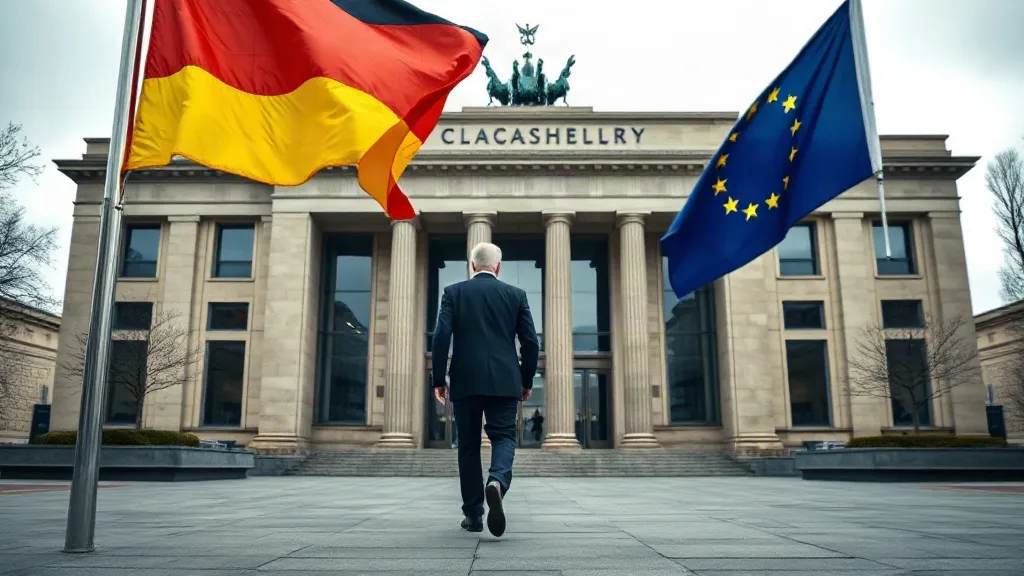
When Andy Burnham walked into the chancellery in Berlin this week, he carried more than a mayor's brief. The Greater Manchester mayor has long been a vocal advocate for a softer, more pragmatic relationship with the European Union, and his meeting with German Chancellor Friedrich Merz put that vision squarely on the diplomatic table. According to sources familiar with the discussions, Merz told Burnham he wants the UK to be 'closer and closer' to the EU, a phrase that will resonate far beyond the chancellery walls.
The timing is telling. With the UK's post-Brexit trade deal up for review in 2026 and a new Labour government in Westminster promising to 'reset' relations with Brussels, the German Chancellor's comments signal that Europe's largest economy is ready to welcome a more integrated Britain. But the path from political rhetoric to tangible policy is rarely straightforward, and the meeting in Berlin has reignited a debate that has simmered since the 2016 referendum: just how close can the UK get to the EU without formally rejoining?
The Berlin Meeting: What Was Said and Why It Matters
Friedrich Merz, who took office in May 2025, has consistently positioned himself as a pro-European leader who sees the UK as a natural partner on defence, trade, and climate policy. His decision to host Burnham, a figure who has repeatedly called for a youth mobility scheme and closer alignment with the EU's single market, is a clear signal that Berlin is willing to engage with voices beyond the official diplomatic channels of Whitehall.
During the talks, Merz reportedly pledged to do 'anything we can' to bring the UK 'back to Europe', though he stopped short of specifying what that would mean in practice. The phrase 'back to Europe' is loaded, of course. For some, it suggests a full reversal of Brexit; for others, it simply means a deeper, more structured partnership that stops short of customs union or single market membership. Burnham, for his part, has been careful to frame his position as pro-growth rather than pro-rejoin, arguing that closer ties would remove trade friction that has hampered British exporters.
What makes this meeting more than a photo opportunity is the broader context. The UK's economy has underperformed compared to its G7 peers since 2020, and businesses in sectors from automotive to pharmaceuticals have been vocal about the costs of regulatory divergence. Meanwhile, the EU has its own reasons to want a closer relationship: the war in Ukraine, energy security, and the need for a unified front on China have all made cooperation with London more urgent.
A French Nudge: Go 'All the Way' on Brexit
As if to underscore the momentum, a French minister used the same week to urge the UK Prime Minister to go 'all the way' on reversing Brexit. The comment, which came during a separate bilateral meeting, reflects a growing impatience in Paris with the piecemeal approach that has characterised UK-EU relations since the Trade and Cooperation Agreement was signed in 2020. France has historically taken a harder line on Brexit, but the current geopolitical climate has softened its stance, at least in public.
The French intervention is significant because it highlights a divide within the EU about how far to push the UK. Some member states, particularly those with strong trade links to Britain, favour a pragmatic, sector-by-sector approach. Others, like France, have traditionally insisted that the UK cannot cherry-pick the benefits of membership without the obligations. The minister's call to go 'all the way' suggests that at least some in Paris now believe the costs of a distant UK outweigh the political awkwardness of welcoming it back.
For the UK Prime Minister, however, the political calculus is delicate. While public opinion has shifted modestly in favour of a closer relationship with the EU, rejoining the bloc remains a toxic topic in many constituencies. The government's official position is to seek a 'better' deal, not to reverse Brexit. But as economic headwinds persist and the 2026 review approaches, the pressure to go further will only grow.
The Economic Case for Closer Ties
Behind the diplomatic pleasantries lies a hard economic reality. A study by the UK in a Changing Europe think tank estimated that Brexit has reduced UK goods trade with the EU by around 15% since 2021. Smaller exporters have been hit hardest, with many citing customs paperwork and regulatory hurdles as reasons for withdrawing from European markets altogether. The Office for Budget Responsibility has projected that Brexit will reduce long-run productivity by around 4% compared to a scenario where the UK stayed in the EU.
These are not abstract numbers. In Greater Manchester, Burnham has made the case that the region's manufacturing base, from textiles to advanced materials, has been disproportionately affected by the loss of frictionless trade. A youth mobility scheme, which Burnham has championed, would not solve all these problems, but it would be a tangible step towards rebuilding the people-to-people links that have eroded since 2016.
The German Chancellor's willingness to engage with Burnham suggests that Berlin sees value in supporting voices within the UK that advocate for closer ties. It is a subtle form of diplomacy: rather than lecturing London, Berlin is amplifying the message from within. Whether that translates into concrete concessions during the 2026 review remains to be seen, but it sets a positive tone.
What Could 'Closer and Closer' Actually Mean?
If Merz's words are to be taken at face value, the UK could move towards a relationship that resembles the EU's arrangements with Norway or Switzerland. That would mean participation in the single market or customs union, or at least a significant degree of regulatory alignment. But each model comes with trade-offs. Norway pays into the EU budget and accepts free movement of people without having a seat at the table. Switzerland's relationship is a complex patchwork of bilateral agreements that has become increasingly strained.
A more likely scenario in the short term is a series of incremental agreements: a veterinary deal to reduce checks on food and agricultural products, mutual recognition of professional qualifications, and a deal on youth mobility. These measures would not satisfy those who want full rejoining, but they could deliver meaningful economic benefits and build trust for further steps.
The EU has its own internal debates to manage. Any move to deepen ties with the UK would require unanimous agreement from all 27 member states, and some, like Hungary, have shown a willingness to use Brexit as a bargaining chip on other issues. The European Commission, meanwhile, has been cautious about offering the UK anything that looks like cherry-picking.
The Politics at Home
In Westminster, the Prime Minister faces a balancing act. The Labour government has staked its reputation on economic growth, and closer EU ties are seen by many in the party as a low-hanging fruit. But the opposition, still reeling from its 2024 election defeat, is ready to accuse the government of betraying Brexit. The phrase 'betrayal' has lost some of its potency, but it still resonates in certain parts of the country.
Burnham's role in this drama is instructive. As a mayor, he operates outside the constraints of Westminster politics, allowing him to speak more freely about the benefits of EU cooperation. His meeting with Merz was not an official state visit, but it carried weight precisely because it was unofficial. It showed that the appetite for closer ties is not confined to Brussels or Berlin; it exists in the UK too.
The French minister's call to go 'all the way' adds another layer. It puts pressure on the UK government to be more ambitious, while also exposing the limits of what is politically feasible. For now, the government is likely to stick to its incremental approach, hoping that a series of small wins will build momentum for something bigger.
What Happens Next?
The 2026 review of the Trade and Cooperation Agreement will be the key moment. Both sides have already begun laying the groundwork, with officials meeting regularly to identify areas where cooperation can be deepened. The EU is expected to push for a level playing field on state aid and environmental standards, while the UK will seek easier access for its services sector, which is currently largely excluded from the deal.
Merz's comments in Berlin suggest that Germany will be a constructive partner in those talks. But Germany alone cannot deliver a deal; the Commission negotiates on behalf of all member states, and any agreement must be ratified by the European Parliament and national parliaments in some cases. The road ahead is long and technical, but the political signal from Berlin is unmistakable: the EU's biggest economy wants the UK closer.
For Burnham, the meeting was a chance to put his vision on the record. He has long argued that Brexit was a mistake, but he has also been pragmatic about the steps needed to undo its worst effects. Whether his visit to Berlin will be remembered as a turning point or a footnote depends on what happens next in London, Paris, and Brussels. For now, the words 'closer and closer' hang in the air, a promise that may yet reshape Britain's place in Europe.
Frequently Asked Questions
What did Friedrich Merz say about the UK and the EU?
German Chancellor Friedrich Merz told Andy Burnham that he wants the UK to be 'closer and closer' to the EU, pledging to do 'anything we can' to bring Britain back to Europe. The comments were made during talks in Berlin.
Who is Andy Burnham and why did he meet Merz?
Andy Burnham is the Mayor of Greater Manchester and a prominent advocate for closer UK-EU ties. He met Merz to discuss ways to strengthen cooperation, including a youth mobility scheme and reducing trade barriers.
What did the French minister mean by going 'all the way' on Brexit?
The French minister urged the UK Prime Minister to go 'all the way' on reversing Brexit, suggesting that France would support a deeper relationship than the current trade deal allows. It reflects a shift in Paris's stance amid geopolitical pressures.
Could the UK rejoin the EU?
Full rejoining is not currently on the table. The UK government is seeking a 'better' deal, not reversal. However, closer alignment through incremental agreements is possible, especially during the 2026 review of the Trade and Cooperation Agreement.
What is the 2026 review of the UK-EU trade deal?
The Trade and Cooperation Agreement includes a review clause that allows both sides to reassess the deal in 2026. It is seen as an opportunity to deepen cooperation on issues like trade, mobility, and regulatory standards.