
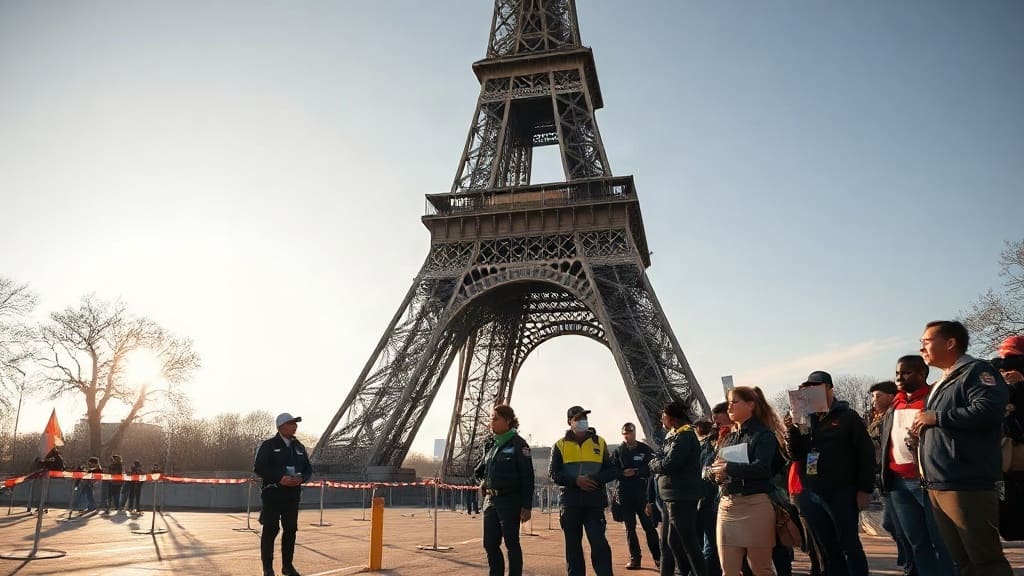
Paris woke up to an unusual sight on Monday: the Eiffel Tower, one of the world's most visited monuments, closed its gates to tourists. The reason wasn't a technical fault or a security threat, but a strike by its own workers. At the heart of the protest was a decision by management that many saw as a step backward: female staff were asked to leave their posts during a visit by a Hindu group known as BAPS. The union representing the workers called the move discriminatory, and the walkout quickly became a flashpoint in the broader conversation about gender equality in the workplace.
The strike sent a clear message that employees are no longer willing to accept gender-based exclusion as a condition of their jobs, even when it's framed as cultural accommodation. For the thousands of tourists who had planned to ascend the iconic iron lattice tower, the closure was a disappointment. But for the workers, it was a necessary stand against what they described as an unacceptable practice.
What Led to the Strike
The controversy began when the Eiffel Tower's management reportedly instructed female employees to leave their workstations ahead of the visit by BAPS, a Hindu organization known for its large temple complexes and volunteer-driven community work. According to the workers' union, the request was made to accommodate the group's cultural or religious preferences, though the exact details of the request remain unclear. The union, however, was unequivocal in its response: asking women to step aside simply because of their gender is not a reasonable accommodation; it's discrimination.
Workers were quick to point out that the Eiffel Tower is a public monument and a symbol of French values, including equality. "We cannot accept that in 2025, women are still being asked to hide themselves to please a visitor," one employee said, speaking on condition of anonymity. The sentiment echoed across social media, where many users expressed solidarity with the striking workers and criticized the management's decision.
BAPS and the Question of Cultural Sensitivity
BAPS, or Bochasanwasi Akshar Purushottam Swaminarayan Sanstha, is a global Hindu organization with a significant presence in Europe and North America. It is known for its elaborate temples, such as the Akshardham complexes in Delhi and New Jersey, and its emphasis on volunteerism and community service. The group has not publicly commented on the incident, and it remains unclear whether the request for female workers to be removed came directly from BAPS representatives or was an overzealous interpretation by the tower's management.
This ambiguity has fueled a broader debate about cultural sensitivity in the workplace. On one hand, many argue that respecting the traditions of visitors is a hallmark of hospitality, especially in a city like Paris that welcomes millions of international tourists each year. On the other hand, critics say that accommodating a request that treats women as second-class citizens crosses a line, regardless of the cultural context. The Eiffel Tower strike has become a case study in how to balance these competing values.
The Union's Stance and Management's Response
The union representing Eiffel Tower workers, CGT, was quick to condemn the management's decision. In a statement, the union said that the request to exclude women was "unacceptable and contrary to the values of the Republic." It called for an immediate end to such practices and for management to issue a formal apology to the affected employees. The strike, which began on Monday morning, was intended to pressure management into addressing these demands.
For its part, the Eiffel Tower's operating company, SETE, initially remained silent, but later issued a brief statement saying that it "regrets the inconvenience caused to visitors" and that it is "in dialogue with staff representatives to find a solution." The statement did not address the specific allegations of gender discrimination, which only added to the frustration among workers and observers.
A Symbolic Venue for a Modern Fight
The choice of the Eiffel Tower as the stage for this labor action is significant. The monument is not just a tourist attraction; it is a global icon of France and its ideals. Strikes at the Eiffel Tower are not uncommon, but they usually revolve around pay, working conditions, or pension reforms. This time, the issue is different. It's about dignity and the right of women to be present and visible in all spaces, even when a powerful visitor might prefer otherwise.
Labor experts say the strike reflects a growing assertiveness among workers in the service and tourism sectors, who are increasingly unwilling to accept discriminatory practices as part of the job. "What we're seeing is a shift in workplace culture," said sociologist Marie Dubois, who studies labor movements in France. "Workers are no longer just fighting for better wages; they're fighting for respect and equality. The Eiffel Tower strike is a perfect example of this new wave of activism."
Legal and Ethical Implications
Under French law, gender-based discrimination in the workplace is strictly prohibited. The Labour Code explicitly forbids any measure that treats employees differently based on sex, unless it is a genuine occupational requirement. Asking female workers to leave their posts for a visitor's comfort would almost certainly not meet that threshold. Legal experts say that if the facts are as reported, the management could face legal action from employees or unions.
Beyond the legal questions, there are ethical ones. The Eiffel Tower is a public institution that receives significant state support. Many argue that it has a duty to uphold the principles of the French Republic, including equality between men and women. By allegedly bending to a request that undermines that principle, the management has opened itself to accusations of failing in its public mission. The strike, then, is not just about one incident; it's about holding a public institution accountable to its own values.
Reactions from Around the World
News of the strike spread quickly on social media, with hashtags like #EiffelTowerStrike and #GenderEquality trending in France and beyond. Many users praised the workers for taking a stand, while others questioned whether the management's decision was simply a misguided attempt at hospitality. Some pointed out that BAPS itself has a long history of promoting volunteerism and community service, and questioned whether the group would have actually requested such an exclusion.
The incident has also reignited a broader conversation about gender equality in the tourism industry, where women are often overrepresented in frontline roles but underrepresented in management. According to a 2024 report by the International Labour Organization, women make up 54% of the global tourism workforce but hold only 30% of senior positions. The Eiffel Tower strike, some argue, is a symptom of a deeper problem: the undervaluing of women's labor and the assumption that their presence can be erased when inconvenient.
What Happens Next
As of Monday evening, the Eiffel Tower remained closed, and it was unclear when it would reopen. The union has said it will continue the strike until management provides a satisfactory response. That response, union leaders say, must include a clear commitment to never again exclude workers based on gender, as well as an apology to the women who were affected.
Tourism officials are watching closely. The Eiffel Tower attracts nearly 7 million visitors a year, and any prolonged closure could have significant economic consequences. But for the workers, the stakes are higher than lost revenue. They see this as a fight for the soul of their workplace and, by extension, for the values that France claims to represent.
Conclusion
The Eiffel Tower strike is more than a labor dispute; it's a referendum on how far a society is willing to go to accommodate cultural differences at the expense of its own principles. The workers who walked out on Monday did so not just for themselves, but for every woman who has ever been asked to step aside. Their message is simple and powerful: equality is not negotiable, even at the foot of the world's most famous tower.
Frequently Asked Questions
Why did Eiffel Tower workers go on strike?
Workers went on strike because female staff were reportedly asked to leave their stations during a visit by a Hindu group called BAPS. The union representing the workers called this gender-based exclusion discriminatory and unacceptable.
What is BAPS and why were women excluded from their visit?
BAPS is a global Hindu organization known for its temples and community service. It is not clear whether BAPS itself requested the exclusion of women or if the Eiffel Tower's management made the decision independently. The incident has sparked debate about cultural sensitivity versus gender equality.
Is the Eiffel Tower still closed due to the strike?
As of the latest reports, the Eiffel Tower remained closed on Monday. The duration of the closure depends on negotiations between the workers' union and management. Visitors are advised to check the official website for updates.
How does this strike relate to gender equality in the workplace?
The strike highlights ongoing challenges in achieving gender equality, particularly in the service and tourism sectors. Workers argue that asking women to step aside for a visitor's comfort is a form of discrimination, and they are using the strike to demand that such practices end.
What are the legal implications of excluding women from work duties?
Under French law, gender-based discrimination in the workplace is prohibited. If the Eiffel Tower's management did instruct female employees to leave their posts solely because of their gender, it could face legal consequences, including lawsuits from affected workers or unions.