
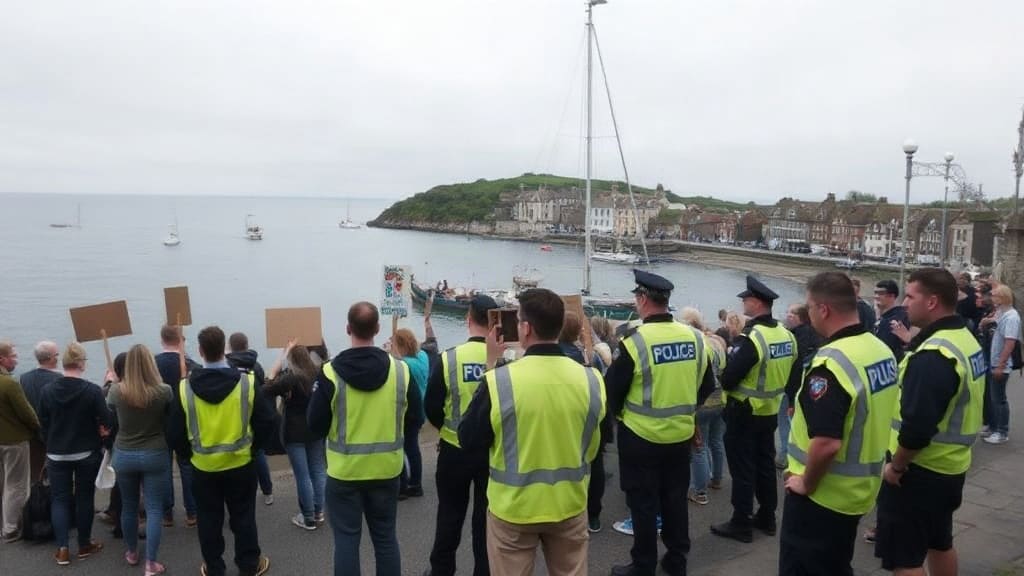
In recent weeks, the English coastal towns of Dover and Portsmouth have become focal points for demonstrations against migrant arrivals. At the center of these events is a man named Danny Thomas, who appears to have coordinated the protests with significant planning. While the gatherings have drawn both support and criticism, the details surrounding Thomas and his motivations remain less clear. This article pieces together what is publicly known about the protests, the organizer, and the broader context that has made migration such a volatile issue in these communities.
The Protests: What Happened in Dover and Portsmouth
Dover has long been a symbolic entry point for migrants crossing the English Channel in small boats. The town's cliffs and port have become synonymous with both humanitarian arrivals and political tension. On the day of the protest, demonstrators gathered near key landmarks, holding signs and chanting slogans that expressed frustration with the government's immigration policies. The atmosphere was reportedly tense but largely peaceful, with a visible police presence ensuring public order.
Portsmouth, a naval city with its own history of maritime arrivals, saw a similar demonstration. Although smaller in scale, the protest echoed the same themes: concerns about border security, the strain on local services, and a demand for stricter enforcement of immigration laws. Danny Thomas was present at both locations, suggesting a coordinated effort rather than spontaneous local outbursts.
Who Is Danny Thomas?
Danny Thomas is not a nationally known political figure, but his name has surfaced repeatedly in connection with these protests. According to available information, he appears to have been the primary organizer, spending weeks preparing logistics, securing permits where necessary, and mobilizing supporters through social media and local networks. His background is not widely documented, and he has not sought media attention, which has led to speculation about his affiliations and long-term goals.
What is clear is that Thomas managed to bring together a diverse group of participants, ranging from long-time anti-immigration activists to ordinary residents who feel their concerns have been ignored by mainstream politicians. This ability to tap into local grievances has made the protests more than a fringe event; they represent a broader sentiment that exists in many coastal communities.
The Broader Context: Why Anti-Migrant Sentiment Is Rising
To understand the protests, one must look beyond the immediate events. The English Channel has seen a sharp increase in small boat crossings over the past few years. These journeys are dangerous, and the number of people attempting them has put pressure on local authorities in Kent and Hampshire. Towns like Dover have experienced a visible increase in migrant arrivals, and some residents feel that the national government has not adequately addressed their concerns about housing, healthcare, and education resources.
At the same time, the issue has become highly politicized. National debates over asylum policy, the Rwanda deportation plan, and the role of the Border Force have created an environment where local frustrations can quickly escalate into organized protest. Danny Thomas tapped into this environment, giving a voice to those who feel that their communities are bearing the brunt of a national problem without adequate support or consultation.
What the Protesters Are Demanding
The demands voiced at the Dover and Portsmouth protests were not uniform, but several common themes emerged. Many participants called for an end to small boat crossings altogether, arguing that they encourage illegal immigration and put lives at risk. Others focused on the perceived failure of the asylum system, claiming that genuine refugees are being mixed with economic migrants and that processing times are too slow. A smaller but vocal group expressed more extreme views, including calls for immediate deportation of all undocumented migrants.
Danny Thomas himself has not publicly articulated a detailed policy platform. His role appears to be more about mobilization than policy formulation. This has led some observers to question whether the protests are truly grassroots or whether they are being steered by more established far-right organizations. Without clear statements from Thomas, the answer remains uncertain.
Reactions from Local Communities and Authorities
The protests have elicited mixed reactions. Some local residents support the demonstrations, stating that they provide a necessary outlet for concerns that are often dismissed in national discourse. Others have expressed discomfort, noting that the protests can create a hostile environment for migrants and minority communities who already live in the area. Business owners in Dover have also weighed in, with some worried that negative media coverage could deter tourists and harm the local economy.
Local authorities have treaded carefully. Police have emphasized their role in facilitating peaceful protest while preventing disorder. Council leaders have acknowledged the pressures on services but have avoided endorsing the protests' message. The Home Office has not commented directly on Danny Thomas or the events, though it has reiterated its commitment to reducing small boat crossings and processing asylum claims efficiently.
The Role of Social Media in Mobilization
One of the most striking aspects of these protests is the role of social media. Danny Thomas and his associates used platforms like Facebook and Telegram to spread the word, share meeting points, and coordinate activities. This digital organizing allowed them to reach a wide audience quickly and to bypass traditional media filters. It also enabled the rapid spread of information, though not all of it was accurate. Rumors about migrant incidents and government plans circulated widely, sometimes inflaming tensions before the protests even began.
The use of social media also made the protests more visible to national audiences. Videos and photos from Dover and Portsmouth were shared thousands of times, drawing attention from both sympathetic and critical voices. This visibility has forced mainstream politicians and media outlets to respond, even if they would have preferred to ignore the events.
What Happens Next?
The future of these protests remains uncertain. Danny Thomas has not announced any further events, but the underlying grievances have not disappeared. If small boat crossings continue at current levels, the pressure on coastal communities will persist, and other organizers may step in even if Thomas steps back. The government's ability to deliver on its promises to stop the boats will be a key factor in determining whether these protests remain localized or spread to other towns.
For now, the protests in Dover and Portsmouth serve as a reminder that immigration is not just a national policy issue; it is a deeply local one. The people who live in these towns see the effects of policy decisions every day, and some of them have found a voice through Danny Thomas. Whether that voice leads to constructive dialogue or further polarization remains to be seen.
Frequently Asked Questions
Who is Danny Thomas and what is his background?
Danny Thomas is the organizer of anti-migrant protests in Dover and Portsmouth. Public details about his background are limited, and he has not sought media attention. He appears to have spent weeks planning the demonstrations and was present at both events. His motivations appear to stem from concerns about migration and its impact on local communities, but he has not articulated a detailed policy agenda.
Why were the protests held in Dover and Portsmouth?
Dover and Portsmouth are both coastal towns with strong connections to maritime arrivals. Dover is the primary landing point for many small boat crossings, while Portsmouth has a naval history and has also seen migrant arrivals. These towns have experienced visible pressures on local services, making them natural focal points for protests against government immigration policies.
Were the protests peaceful?
Reports indicate that the protests were largely peaceful, with a visible police presence to maintain order. There were no major incidents of violence reported. However, the presence of such protests can create a tense atmosphere, and some local residents and businesses expressed concerns about the potential for disorder or negative impacts on community relations.
What are the main demands of the protesters?
The protesters' demands vary, but common themes include an end to small boat crossings, stricter enforcement of immigration laws, faster processing of asylum claims, and greater support for local communities affected by migration. Some participants hold more extreme views, but the core message revolves around border security and local resource allocation.
Is Danny Thomas affiliated with any political party or organization?
There is no confirmed evidence that Danny Thomas is affiliated with a specific political party or established organization. His organizing appears to be independent, though he may have connections to broader anti-immigration networks. Without clear statements from Thomas, his affiliations remain a matter of speculation.