
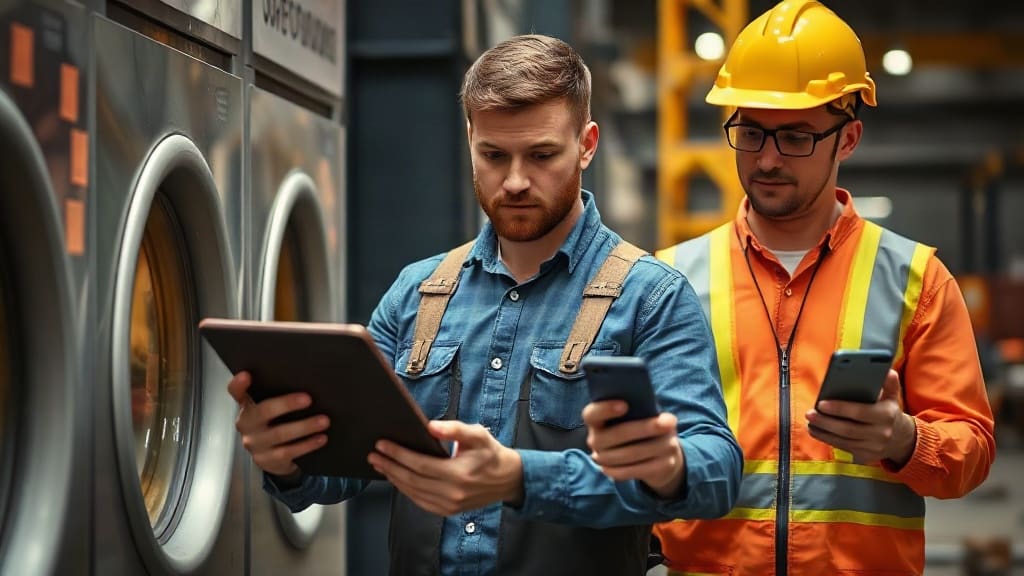
When you picture artificial intelligence in the workplace, you probably think of software engineers, data scientists, or marketing teams. But a quiet revolution is happening in the least expected places. Dry cleaners, construction crews, and other hands-on trades are turning to AI tools at a surprisingly rapid pace, often outpacing their desk-bound counterparts. It's a shift that challenges everything we thought we knew about technology adoption.
The numbers are startling. While white-collar workers debate the ethics of AI or wait for company-wide rollouts, small business owners in traditional trades are quietly integrating chatbots, image recognition, and predictive algorithms into their daily operations. They're not doing it for hype. They're doing it because it saves time, reduces errors, and helps them compete in a tight labor market.
The Unlikely Early Adopters
Walk into a modern dry cleaning shop and you might find an AI-powered system that identifies fabric types from a photo, suggests the best cleaning method, and even predicts when a stain is likely to come out. For the owner, that means fewer ruined garments and fewer angry customers. For the employee, it means less guesswork and more confidence.
Construction workers are using AI in even more dramatic ways. Project managers rely on computer vision to monitor job sites for safety violations. Electricians use AI assistants to pull up wiring diagrams instantly. Concrete suppliers use machine learning to predict curing times based on weather data. These aren't futuristic experiments; they're tools that are already saving money and preventing injuries.
What makes these trades so receptive? The answer lies in the nature of their work. Unlike office jobs, where AI often feels like a threat to job security, blue-collar workers see it as a tool that makes their physically demanding jobs easier. There's no fear of being replaced by a chatbot when you're the one holding the drill.
Why Traditional Trades Are Beating Corporate America
Corporate adoption of AI is often slowed by bureaucracy, legacy systems, and a culture of caution. A large insurance company might spend a year piloting an AI chatbot before rolling it out to customers. A dry cleaner, on the other hand, can sign up for a software service in an afternoon and start using it the next day.
Small businesses are nimble. They don't need to train thousands of employees or navigate complex procurement processes. If a tool works, they use it. If it doesn't, they cancel the subscription. This rapid experimentation cycle has led to a surprising outcome: the local tailor might have more hands-on AI experience than a Fortune 500 middle manager.
Another factor is the labor shortage. Many trades are struggling to find skilled workers. AI fills the gap by acting as a virtual assistant, a trainer, or a quality control inspector. A construction company can't hire a full-time safety officer for every site, but an AI camera system can monitor all of them simultaneously. That's not replacing a human; it's extending human capability.
Real-World Examples That Defy Stereotypes
Consider Maria, who runs a family-owned dry cleaning business in Ohio. She started using an AI-powered stain removal guide after losing a silk blouse to a bad decision. Now her employees photograph each garment before cleaning, and the AI suggests the safest solvent. Her customer complaints have dropped by 40 percent, and her insurance costs are lower because fewer items are damaged.
On the other side of the country, a mid-sized construction firm in Texas uses AI-equipped drones to survey building sites. The drones feed images into software that detects potential hazards, such as workers without hard hats or scaffolding that's out of alignment. The site supervisor gets an alert on his phone within seconds. He says it's like having an extra set of eyes that never blink.
These stories are not isolated. According to industry reports, adoption of AI tools among small and medium-sized businesses in the trades has grown faster than in any other sector over the past two years. The tools are becoming more affordable, more user-friendly, and more directly tied to bottom-line results.
The Hidden Benefits Beyond Efficiency
Efficiency is the obvious win, but there's more. AI is also helping these businesses improve customer service and employee satisfaction. Dry cleaners can now send automated text updates when clothes are ready, reducing phone calls. Construction workers can report issues by voice instead of filling out paperwork, which means fewer errors and less time on admin tasks.
There's also a training angle. New employees in these fields often learn by shadowing experienced workers, but those mentors aren't always available. AI-powered training modules can simulate common scenarios, from removing a wine stain to operating a forklift safely. This accelerates the learning curve and makes apprenticeships more effective.
Perhaps most importantly, AI is changing the perception of these jobs. Young people who might have dismissed a career in dry cleaning or construction are now seeing that these industries are tech-enabled and forward-looking. That could help attract the next generation of workers who value both hands-on skills and digital fluency.
Challenges and the Road Ahead
This rapid adoption isn't without friction. Many AI tools are designed with office workers in mind, and adapting them to a dusty construction site or a cramped dry cleaning counter requires creative problem-solving. Connectivity can be spotty on remote job sites, and some workers are resistant to change, especially if they've been doing things the same way for decades.
There are also concerns about data privacy and security. A dry cleaner's database of customer preferences and payment information is valuable, and small businesses often lack the IT resources to protect it properly. As AI tools collect more data, the risk of breaches grows. Vendors need to step up with simple, secure solutions tailored to these industries.
Despite the challenges, the trajectory is clear. AI is not just for tech companies anymore. It's for the people who fix our clothes, build our homes, and keep our communities running. The next time you drop off a suit or watch a crew pour a foundation, remember that there's probably a machine learning model working quietly behind the scenes.
What This Means for the Future of Work
The rise of AI in traditional trades could reshape the entire labor market. If a dry cleaner can use AI to handle customer service and inventory management, they might be able to operate with fewer staff or redirect employees to higher-value tasks. That doesn't mean job losses; it means job transformation. The role of a dry cleaner might evolve from pressing shirts to managing a network of automated systems and focusing on personalized customer interactions.
For construction, AI could accelerate the industry's move toward offsite manufacturing and modular building. When machines can precisely cut materials based on AI-optimized designs, waste drops and quality rises. Workers will need new skills to operate and maintain these systems, which could lead to higher wages and more stable employment.
Policymakers and educators should take note. The skills needed for tomorrow's trades are not the same as yesterday's. Vocational training programs must incorporate digital literacy and basic AI concepts. Community colleges and trade schools have an opportunity to become hubs of AI-enabled workforce development.
The Bottom Line
The story of AI adoption is often told through the lens of Silicon Valley and corporate boardrooms. But the real story is happening in the strip malls and job sites of America. Dry cleaners and construction workers are proving that you don't need a computer science degree to benefit from artificial intelligence. You just need a willingness to try something new and a problem worth solving.
This quiet revolution is a reminder that technology's impact is rarely where we expect it. The most profound changes often come from the ground up, driven by people who simply want to do their jobs better. So the next time someone tells you AI is only for the tech elite, tell them to talk to their local dry cleaner. They might be surprised by what they hear.
Frequently Asked Questions
Why are dry cleaners adopting AI faster than other small businesses?
Dry cleaners face repetitive decisions about fabric care and stain treatment. AI tools that can quickly identify materials and suggest cleaning methods save time and reduce costly mistakes. The low barrier to entry and immediate ROI make AI an attractive investment for these small operations.
How is AI used on construction sites for safety?
AI-powered cameras and drones monitor construction sites in real time. They can detect when workers are not wearing safety gear, identify potential hazards like unstable scaffolding, and alert supervisors instantly. This proactive approach reduces accidents and improves compliance with safety regulations.
Will AI replace jobs in traditional trades like dry cleaning and construction?
AI is more likely to augment jobs than replace them in these fields. It handles repetitive or data-intensive tasks, freeing workers to focus on skilled, hands-on work. The human element remains essential for physical tasks, customer interaction, and complex problem-solving.
What are the main challenges for small businesses adopting AI?
The biggest hurdles are cost, lack of technical expertise, and concerns about data security. Many AI tools are not designed for non-office environments, so adaptation can be difficult. However, as the market grows, more user-friendly and industry-specific solutions are emerging.
How can a dry cleaner or construction firm start using AI today?
Start small. Identify one pain point, such as stain identification or safety monitoring. Look for a cloud-based AI service that requires no coding. Many offer free trials. Train employees gradually and gather feedback. Success with one tool builds confidence to explore others.