
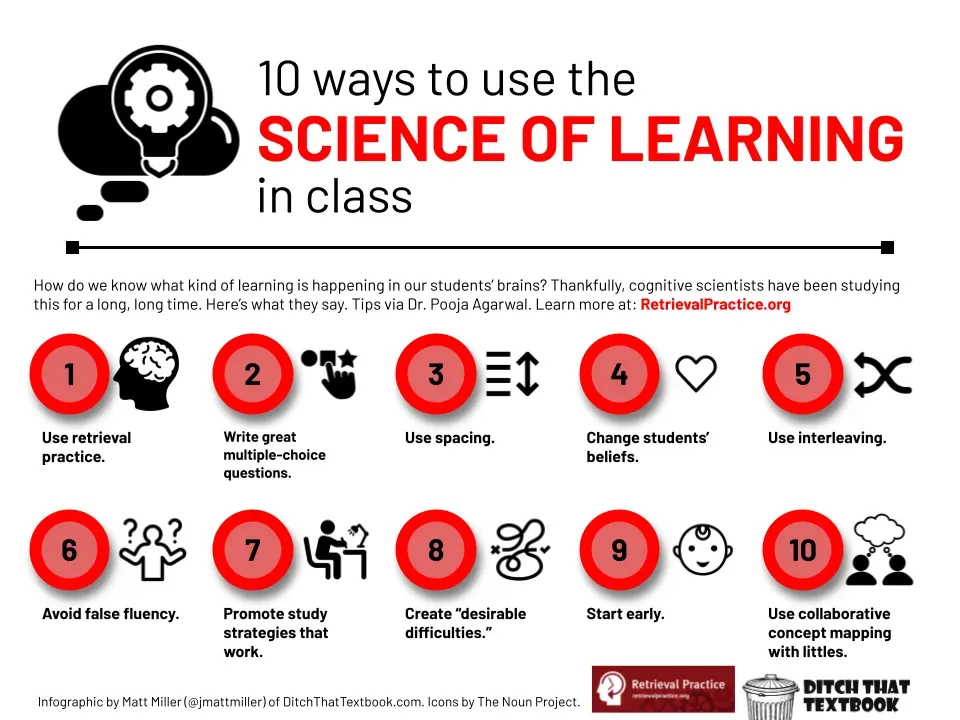
The science of learning offers a practical map for studying smarter, not harder, by explaining how our brains encode, store, and retrieve information. When you study with this frame in mind, you move beyond guesswork toward evidence-based methods that support lasting understanding, sharper recall, and transferable skills. To keep you on track, this guide highlights strategies like active recall that strengthen memory and speed up retrieval when you need it. By aligning practice with how memory develops—from encoding to consolidation to eventual retrieval—you create study sessions that improve long-term retention. Together, these ideas form a flexible framework you can apply across subjects, times, and goals to study smarter rather than simply longer.
In other terms, the study of how people learn can be framed through cognitive psychology, neuroscience, and educational theory, focusing on how information is encoded, consolidated, and retrieved in memory. This perspective highlights how memories are formed in the brain, strengthened during rest, and accessed when needed, providing practical guidance for designing efficient practice and self-testing. Put simply, optimizing study means aligning activities with how we remember, rather than simply consuming text. By speaking the language of memory, encoding cycles, retrieval cues, and neural plasticity, learners can build robust mental models that transfer across subjects and real-world tasks.
Science of Learning Foundations: How Cognitive Science Shapes Study Habits
The science of learning is a synthesis from cognitive psychology, neuroscience, and educational theory that explains how our brains encode, store, and retrieve information. It describes memory as a dynamic process with distinct stages—encoding, consolidation, and retrieval—each of which can be strengthened or weakened by how we study. When study habits align with these principles, learners move from guesswork to evidence-based practice that supports durable retention over time.
In practical terms, this means designing encoding experiences that stick, supporting consolidation during rest and sleep, and practicing retrieval so knowledge becomes readily accessible when needed. By foregrounding these core stages, you can choose effective study techniques that maximize memory retention strategies, reduce wasted effort, and build a reliable personal learning system grounded in research.
Effective Study Techniques for Durable Knowledge
Effective study techniques are more than a collection of tricks; they are a cohesive approach that targets encoding, consolidation, and retrieval. Techniques such as active engagement, deliberate practice, and strategic self-testing turn passive rereading into meaningful work that strengthens memory traces. By pairing concise, goal-focused sessions with brief checks for understanding, you create a rhythm that supports long-term learning.
Integrating these methods with a plan grounded in spaced repetition and retrieval practice helps translate theory into habit. As you mix different problem types, explain concepts aloud, and generate retrieval prompts, you leverage memory retention strategies that keep material accessible. The result is a learning system that scales across subjects and exams, not just a single topic.
Memory Retention Strategies Across Encoding, Consolidation, and Retrieval
Memory retention strategies map directly onto the brain’s encoding, consolidation, and retrieval pathways. Effective encoding uses multi-sensory inputs and meaningful connections to create durable memory traces. Consolidation benefits from rest and sleep, during which memories are stabilized and reorganized for later access. Retrieval practice then strengthens the pathways needed to recall information under pressure.
A well-rounded study routine weaves these stages together: engage deeply during learning, schedule rest periods to support consolidation, and repeatedly practice retrieval to reinforce accessibility. This approach treats memory as an active, repeatable process rather than a one-off event, aligning with how cognitive systems actually store and retrieve knowledge.
Spaced Repetition: Optimizing Review Timing for Maximum Recall
Spaced repetition is a core technique with strong empirical support for long-term memory. By reviewing material at expanding intervals—gradually moving from days to weeks—you combat forgetting curves and strengthen memory retention strategies over time. This approach makes each review session more productive, as you’re reactivating knowledge just when you’re most likely to benefit from reinforcement.
Implementing spaced repetition can be simple: plan short, focused reviews after initial learning, then increase the gaps as recall becomes more automatic. When combined with active recall and concise prompts, spaced repetition turns study time into a reliable engine for durable knowledge rather than a one-off cram.
Active Recall and Retrieval Practice: Strengthening Memory Traces
Active recall, or retrieval practice, is one of the most powerful tools in the science of learning. By forcing yourself to retrieve information from memory rather than passively rereading notes, you strengthen the neural pathways that support future recall. This makes recall faster and more accurate when it matters most, such as during exams or real-world problem solving.
To maximize impact, transform questions into flashcards, practice problems, or teach concepts aloud as if you were explaining them to someone else. The act of retrieval—and the feedback you get from checking accuracy—serves as a critical learning signal that amplifies memory retention strategies and improves long-term understanding.
Interleaving and Elaboration: Building Flexible Understanding
Interleaving challenges your brain to distinguish between closely related concepts by mixing topics within a study session. This contrasts with blocking, which can create a false sense of mastery. Interleaving trains you to select the correct approach in real time, helping transfer knowledge to new contexts and problems.
Elaboration deepens learning by connecting new ideas to what you already know through explanations, analogies, or real-world examples. This richer encoding supports retrieval by creating multiple retrieval cues. Together, interleaving and elaboration form a powerful pair for durable learning that adapts across disciplines and tasks.
Dual Coding and Metacognition: Visual Tools and Self-Assessment
Dual coding leverages both verbal and visual channels to strengthen memory traces. Diagrams, flowcharts, and mind maps complement written notes, creating multimodal memories that are easier to retrieve. When you encode information in multiple formats, you increase the chances of recall under diverse conditions.
Metacognition—thinking about your own thinking—lets you monitor understanding, adjust strategies, and calibrate your effort. Regular self-assessment helps identify gaps, informs what to review next, and prevents unnecessary cognitive load. By pairing visuals with self-checks, you build a resilient learning system anchored in evidence-based practice.
Overcoming Barriers: Procrastination, Sleep, and Cognitive Load
Even the best study plan falters when barriers creep in. Procrastination can erode the quality of encoding and undermine retrieval practice, so breaking tasks into small, time-boxed blocks and rewarding progress helps maintain momentum. Establishing a consistent routine makes it easier to start and sustain focused study sessions.
Other obstacles, like insufficient sleep and high cognitive load, directly affect consolidation and encoding. Prioritize regular sleep, minimize unnecessary interruptions, and chunk information into manageable units to reduce working-memory strain. Addressing these barriers is essential to keep memory retention strategies effective over weeks and months.
From Theory to Practice: A Practical 4-Week Plan
Applying the science of learning to everyday study means translating principles into a concrete plan. Start with a goals-driven week that builds a retrieval-focused routine, introduces a simple spaced repetition schedule, and adds a visual element to accompany notes. This foundation sets up a sustainable habit that respects encoding, consolidation, and retrieval.
As you progress, interleave topics, refine flashcards for deeper recall, and monitor sleep and routines that support consolidation. Track your study metrics—time spent, accuracy, and perceived difficulty—to fine-tune the balance between effort and reward. The goal is steady improvement through deliberate, evidence-based practice.
Measuring Progress with Data: Tracking What Works
A data-driven approach helps you see which techniques yield real gains in memory retention and performance. Record what study methods you used, how you felt during learning, and the outcomes you observed in retrieval tests. Over time, patterns emerge that reveal which combinations of active recall, spaced repetition, and interleaving are most effective for you.
Use these insights to adapt your plan and maintain momentum. By aligning ongoing practice with feedback from performance metrics, you strengthen your metacognitive skills and create an adaptive learning loop. The outcome is a personalized system that sustains improvement beyond any single course or topic.
Frequently Asked Questions
What does the science of learning say about using spaced repetition and active recall as effective study techniques for memory retention strategies?
The science of learning shows memory improves when encoding, consolidation, and retrieval are optimized. Key techniques include active recall (testing yourself) and spaced repetition (reviewing on increasing intervals), along with interleaving, elaboration, and dual coding. To apply this: after each study segment, practice retrieval; schedule quick reviews (e.g., 1 day, 3 days, 1 week, 2 weeks); mix topics and use visuals to support encoding; and monitor your progress to adjust practice. This approach strengthens memory retention and makes knowledge more transferable.
| Section | Core Idea | Practical Takeaways |
|---|---|---|
| Introduction | Science of learning is a field rooted in cognitive psychology, neuroscience, and educational theory that explains how our brains encode, store, and retrieve information. Studying with this lens moves you from guesswork to evidence-based methods that improve long-term retention. | |
| Core Concepts | Memory works in three stages: encoding, consolidation, retrieval. Encoding takes in information; consolidation stabilizes/strengthens memories; retrieval accesses what has been learned. Effective study plans optimize all three stages. | |
| Related Keywords | memory retention strategies, effective study techniques, spaced repetition, active recall | |
| Myths vs Realities | Myths: more time equals better learning; motivation alone drives learning. Realities: quality over quantity; strategic practices like spaced repetition and retrieval sustain retention. | |
| Key Principles (1) Retrieval Practice | Core Idea: Testing yourself strengthens memory traces and recall; Practice: use flashcards, practice problems, explain concepts aloud as if teaching someone else. | |
| Key Principles (2) Spaced Repetition | Core Idea: Review material over increasing intervals; Practice: schedule reviews (e.g., 1 day, 3 days, 1 week, 2 weeks) to boost long-term retention. | |
| Key Principles (3) Interleaving | Core Idea: Mix related topics or problem types; Practice: alternate topics within a session to improve transfer of learning. | |
| Key Principles (4) Elaboration | Core Idea: Build connections between new information and prior knowledge; Practice: explain relationships, create analogies, teach the concept. | |
| Key Principles (5) Dual Coding | Core Idea: Combine words with visuals; Practice: create diagrams, flowcharts, mind maps to reinforce memory traces. | |
| Key Principles (6) Metacognition | Core Idea: Regularly assess understanding; Practice: identify what you know well, what’s fuzzy, and adjust strategies accordingly. | |
| 4-Week Plan | Week 1: Build Foundation – set goals, retrieval-focused routine, start spaced repetition, add visual elements. | |
| 4-Week Plan (cont.) | Week 2: Expand & Interleave – add quizzes, interleave topics, add elaboration, review sleep/rest for consolidation. | |
| 4-Week Plan (cont.) | Week 3: Sharpen Techniques – refine flashcards for retrieval, adjust spacing, practice real problems, track metrics. | |
| 4-Week Plan (cont.) | Week 4: Solidify Retention – cumulative reviews, continued interleaving, maintain dual coding, reflect on effective strategies. | |
| Tools & Techniques | Spaced repetition apps or schedules; active-recall flashcards; concept maps/diagrams; brief teaching sessions; self-testing with prompts and gaps review. | |
| Barriers & Pitfalls | Procrastination; passive rereading; cognitive overload; poor sleep. Countermeasures: break tasks, emphasize retrieval/elaboration, chunk information, prioritize sleep. | |
| Putting It All Together | Sample day includes retrieval prompts, focused study with visuals, self-test, planning, and light end-of-day review to support memory consolidation. | |
| The Joy of Learning | Study becomes a dynamic, ongoing process where spaced repetition and active recall build durable knowledge across disciplines; habits and evidence-based practices drive growth. | |
| Note | This table summarizes the base content’s key points and practical takeaways on the science of learning. |